
The Build Back Bio Story 1
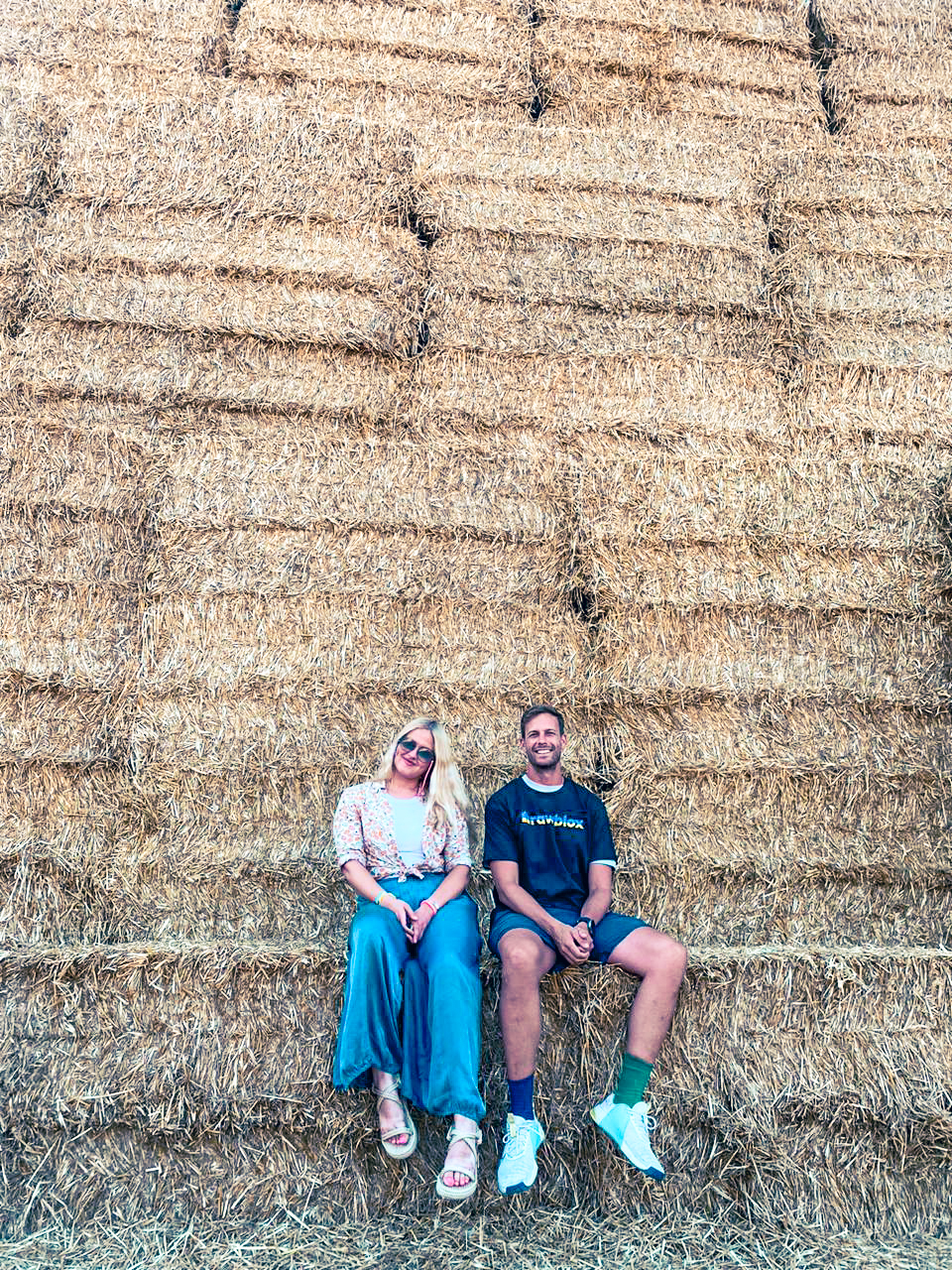
A thrilling tale of innovation, entrepreneurship, and daring: that’s the Build Back Bio story. In our Build Back Bio series, learn what brought an engineer, a biologist, and a businessman together with the aim of revolutionising Ukraine’s construction industry while contributing to its reconstruction.
It was a sunny day in the Netherlands when Daan Hartge, CEO and Founder of Rawblox got a phone call. The caller had a question: would he be interested in deploying his machine line that procudes straw panels for construction to Ukraine? Oh, and would be be able to travel to Ukraine, preferably this week, as it was needed now – there was no time to wait for the end to the war.
When asked later what his response was, Daan stated, “Yes. Just an immediate yes.” He was in Kyiv one week later.
The caller on the other side of the phone was Julia Skripka, Project Manager at OpenDoorUkraine (ODU), a Dutch-Ukrainian NGO headed by the first Dutch ambassador to Ukraine. With ODU, Julia has been actively involved in reconstruction and reparation efforts of Ukraine’s buildings and homes since the start of the war.
When the war broke out, Julia, a native Ukrainian with a background in biology, had been living abroad. Within days of the war breaking out, she had packed her bag, moved to Kyiv, and started working at ODU. “Of course I moved back”, she said, “people needed help”.
Together, Daan and Julia began to understand that they shared a vision of building homes for Ukrainians who had lost theirs as a result of Russian aggression. More than that: they wanted to build them fast, build them cheap, and build them to last.
The question quickly shifted from what they would do, to how they would it.
A clear immediate challenge was funding. The people who needed the homes the most, including women with children’s whose partner was fighting in the war, disabled veterans, internally dispalced persons or lower income individuals, did not have the disposible income to pay for the houses. And how would they import the machine line into Ukraine, and train people how to use it? Neither Rawblox or ODU had the disposible cash on hand to have the impact they wanted.
An immediate answer was Ukraine’s eVidnevlonnia system. The eVidnovlennia programme was created by the government of Ukraine to provide financial support to people whose housing has been damaged or destroyed as a result of the war. The system has been invaluable: whilst giving agency to the victims who use it, who can choose to repair or rebuild their home or move into new housing, it has also stimulated the construction sector, boosting economic activity.
That still left a funding gap, and the answer was to be the Dutch Ukraine Partnership Facility (UPF). The UPF is a funding vehicle of the Netherlands for partnerships of companies and social organizations from the Netherlands and Ukraine that want to contribute to the reconstruction in Ukraine and the sustainable recovery of the Ukrainian economy and society, and cannot do so without government support.
The fund is fully non-profit: whoever applies to the fund and is successful is not allowed to set up a for-profit business – all returns have to be invested in Ukraine.
The Netherlands is a huge donor for Ukraine. To date, the Dutch have contributed almost 9 billion euro to Ukraine (including the UPF fund), and they are continuing to do more.
A vague outline of a project was starting to make itself clear. Now all Daan and Julia had to do was to prove they could build in Ukraine, and apply to the UPF fund.
Follow us next week as we update you on exactly what Build Back Bio will do in Ukraine, how the Rawblox and ODU ended up partnering with Hempire, and how the partnership will achieve its goals. Spoiler alert: there are pickle cellars.